


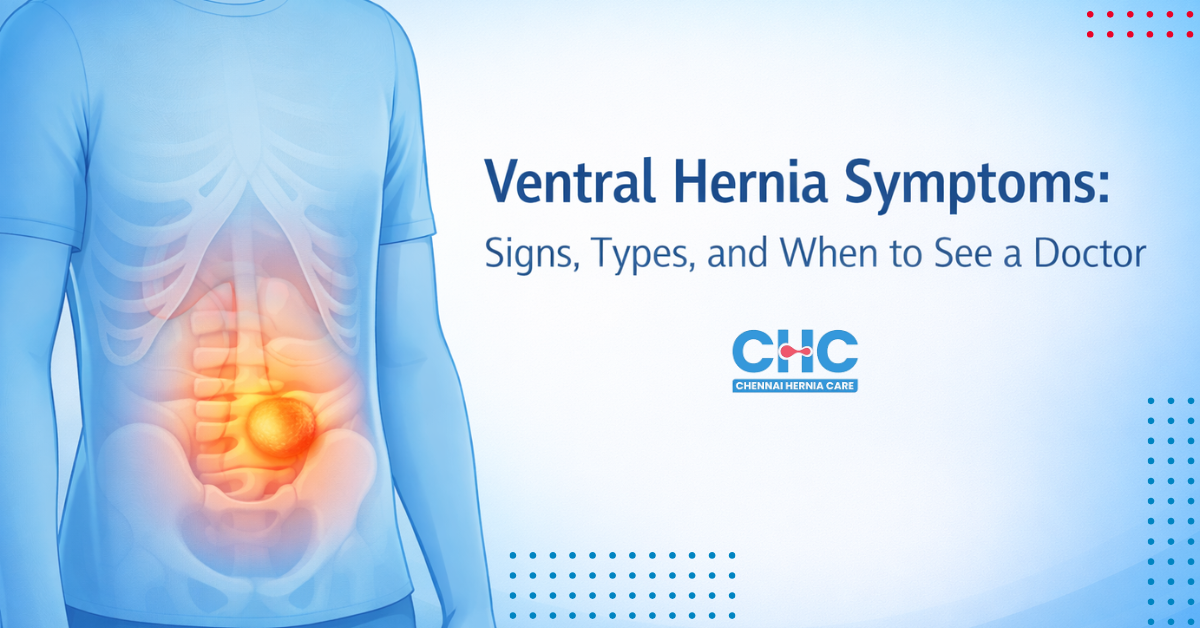
Ventral hernias are a common abdominal wall condition that can affect people of all ages. Many patients first notice a swelling or discomfort in the abdomen, but may not realise its significance. Recognising ventral hernia symptoms early is vital because timely treatment can prevent complications and improve long-term outcomes.
At Chennai Hernia Care, patients are evaluated by experienced specialists, including Dr Deepak Subramanian, a leading hernia surgeon in Chennai, known for treating both simple and complex abdominal hernias with advanced techniques.
What Is a Ventral Hernia?
A ventral hernia occurs when tissue or internal organs push through a weak area in the abdominal muscles. These hernias develop on the anterior abdominal wall and may range from a slight bulge to a large ventral hernia that significantly affects daily life.
Unlike groin hernias, such as an Inguinal Hernia, ventral hernias appear in the midline or previous surgical areas of the abdomen. Over time, the hernia defect may enlarge, especially if left untreated.
Understanding ventral hernia classification helps determine the most appropriate treatment approach.
Ventral Hernia Classification and Types
Ventral hernias are categorised by location and cause. Common ventral hernia types include:
1. Ventral Incisional Hernia
A ventral incisional hernia develops at the site of a previous abdominal surgery. Scar tissue is weaker than healthy muscle, making it prone to bulging months or even years after surgery. This is one of the most common forms of abdominal hernia.
2. Umbilical Hernia
Occurs near the belly button and can affect both children and adults. In adults, obesity and pregnancy increase the risk.
3. Epigastric Hernia
Forms in the upper midline of the abdomen between the breastbone and navel. These are often small but can still cause pain.
4. Spigelian Hernia
A rare hernia that develops along the edge of the abdominal muscles and may be complex to diagnose without imaging.
Knowing the exact type helps surgeons plan the most effective ventral hernia repair.
Common Ventral Hernia Symptoms
The severity of ventral hernia symptoms depends on the hernia’s size, type, and reducibility.
Early Symptoms
- A visible or palpable abdominal bulge
- Mild discomfort while standing, coughing, or lifting
- A feeling of pressure or heaviness in the abdomen
Progressive Symptoms
- Increasing pain at the hernia site
- The bulge is becoming firm or difficult to push back.
- Digestive discomfort or bloating
Warning Signs (Require Immediate Attention)
- Severe abdominal pain
- Nausea or vomiting
- Redness or tenderness over the bulge
These symptoms may indicate complications such as incarceration or strangulation, which are discussed in detail in Incarcerated vs strangulated hernia.
What Causes Ventral Hernias?
Several factors weaken the abdominal wall, increasing the risk of hernia formation:
- Previous abdominal surgery
- Obesity and excess abdominal pressure
- Chronic coughing or constipation
- Heavy lifting without proper support
- Poor wound healing due to diabetes or smoking
- Multiple pregnancies
Patients with these risk factors should consult the best hernia surgeon early if ventral hernia symptoms appear.
How Ventral Hernias Are Diagnosed
Diagnosis usually begins with a specialist’s physical examination. In complex cases, imaging studies may be required:
- Ultrasound for initial assessment
- CT scan to evaluate the size and contents
- MRI for recurrent or significant ventral hernia cases
Accurate diagnosis ensures proper planning for hernia treatment and surgery.
Ventral Hernia Treatment Options
Non-Surgical Management
Small, asymptomatic hernias may be monitored under medical supervision. Lifestyle changes such as weight management and avoiding strain can help, but they do not cure the hernia. Learn more about conservative approaches in hernia treatment without surgery.
Surgical Treatment (Definitive Solution)
Surgery is the only permanent solution for most patients with ventral hernia symptoms.
Ventral Hernia Operation Techniques
Open Ventral Hernia Repair
Involves a larger incision to access the hernia. This approach is often used for complex or recurrent cases and may include mesh placement.
Laparoscopic Ventral Hernia Repair
Laparoscopic ventral hernia repair is a minimally invasive technique performed through small incisions. Benefits include:
- Less postoperative pain
- Faster recovery
- Reduced infection risk
This technique is commonly compared with traditional open hernia surgery and with advanced options such as robotic hernia surgery.
Mesh-Based Repair
Mesh reinforcement strengthens the abdominal wall and lowers recurrence risk. Learn more about materials and outcomes in hernia repair with mesh.
Recovery After Ventral Hernia Surgery
Recovery time varies depending on the surgical method and hernia size:
- Most laparoscopic patients resume light activities within 1–2 weeks
- Open surgery may require a longer recovery.
- Heavy lifting should be avoided for several weeks.
Can Ventral Hernias Come Back?
Recurrence is possible, especially without mesh repair or if lifestyle risk factors persist. Following post-operative advice and maintaining a healthy weight reduces the risk.
When to See a Hernia Specialist in Chennai
You should consult a doctor if:
- The bulge increases in size
- Pain worsens
- Daily activities become difficult.
- You notice digestive symptoms.
At Chennai Hernia Care, patients are treated by Dr Deepak Subramanian, a trusted hernia specialist in Chennai, offering personalised care and advanced surgical solutions.
If you are unsure which doctor to consult for a hernia, early specialist evaluation ensures timely and safe treatment.
Conclusion
Recognising the symptoms of a ventral hernia early is crucial for preventing complications. With proper diagnosis, understanding ventral hernia classification, and selecting appropriate ventral hernia treatment, patients can achieve excellent outcomes.
Whether you require monitoring, a minimally invasive procedure, or surgery for a large ventral hernia, expert care makes a difference. Consult a best hernia surgeon to discuss the safest and most effective treatment options for your condition.

Our Medical Review Process:
Our content goes through a structured review process to ensure medical accuracy and reliability.
Written By: Editorial Team, Chennai Hernia Care
Reviewed By: Dr. Deepak Subramanian, MS, FMAS – Laparoscopic & Bariatric Surgeon
Last Updated: December 29, 2025
