


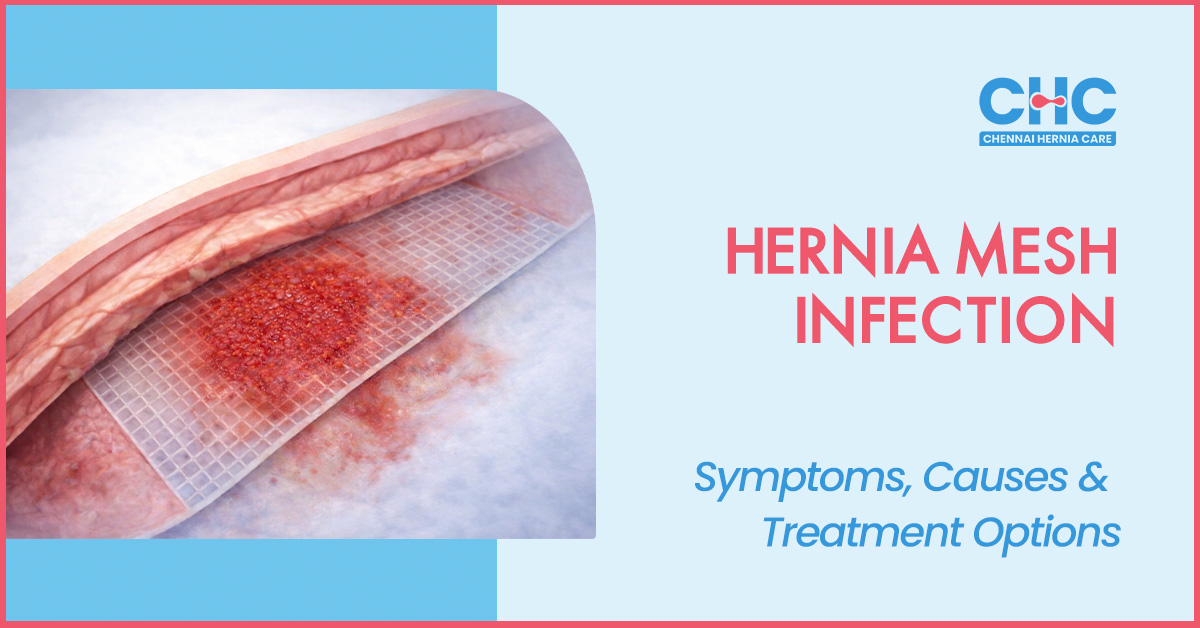
Hernia surgery using mesh has helped many patients recover faster and reduce the risk of hernia recurrence. For most people, recovery is smooth. However, a small number of patients may experience a complication known as hernia mesh infection. While uncommon, this condition needs early attention because delays in treatment can lead to prolonged pain, repeated infections, or additional surgery.
For patients recovering after hernia repair in Chennai, understanding the warning signs and knowing when to consult a specialist can make a real difference. At Chennai Hernia Care, post-surgery follow-up, patient education, and timely consultation are considered essential parts of safe hernia care.
This guide explains hernia mesh infection symptoms, causes, and treatment options in clear, patient-friendly language.
What Is a Hernia Mesh Infection?
A hernia mesh infection occurs when bacteria grow on or around the surgical mesh placed during hernia repair. Mesh is designed to strengthen the weakened area and support healing, but like any medical implant, it can become infected under certain conditions.
Infections may appear:
- Early, within days or weeks after surgery
- Late, several months or even years later
Because symptoms can be subtle at first, mesh infections are sometimes mistaken for normal post-operative discomfort.
Hernia Mesh Infection Symptoms Patients Should Not Ignore
Recognising hernia mesh infection symptoms early allows prompt treatment and better outcomes.
Common Local Symptoms
- Persistent or worsening pain at the surgery site
- Redness, warmth, or swelling near the incision
- Tenderness that does not improve with time
- Fluid or pus-like discharge from the wound
General Symptoms
- Fever or chills
- Fatigue or feeling unwell
- Body aches without another clear cause
Pain, fever, and discharge after hernia surgery occurring together often point toward infection rather than routine healing. If symptoms worsen instead of improving, medical review is important.
Infected Mesh After Hernia Surgery: Why It Happens
Understanding hernia mesh infection causes helps patients recognise risk factors.
Surgical Factors
- Bacterial contamination during surgery
- Prolonged operating time
- Previous hernia repairs in the same area
Patient-Related Factors
- Diabetes or poor blood sugar control
- Smoking
- Obesity
- Reduced immunity
Mesh-Related Factors
- Type of mesh material used
- Placement of mesh in areas with poor blood supply
Patients interested in understanding how mesh is commonly used during hernia repair can read more about hernia repair with mesh and why it remains the standard approach for many hernia types.
Signs of Infection After Hernia Surgery vs Normal Healing
Mild pain, slight swelling, and bruising can be normal after surgery. The concern arises when symptoms persist or worsen.
Normal Recovery
- Gradual reduction in pain
- Dry incision without discharge
- Improving movement and comfort
Possible Hernia Mesh Infection
- Increasing pain after initial improvement
- New redness or warmth
- Fever beyond the first few days
- Continuous or foul-smelling discharge
Knowing the difference helps patients decide when to seek medical advice.
How Is Hernia Mesh Infection Diagnosed?
Diagnosis usually begins with a clinical examination by a hernia specialist.
Evaluation Methods
- Physical examination of the surgical site
- Blood tests to check for infection
- Ultrasound or CT scan to identify fluid collections
- Wound culture if discharge is present
Early diagnosis of hernia mesh infection allows conservative treatment in some cases, avoiding more complex procedures later.
Hernia Mesh Infection Treatment Options
The choice of hernia mesh infection treatment depends on the severity of infection and how early it is detected.
Non-Surgical Treatment
In early or mild cases:
- Targeted antibiotics
- Careful wound management
- Close follow-up
This approach may succeed when infection is superficial and the mesh is not deeply involved.
Surgical Treatment
When infection persists or worsens:
- Drainage of abscess
- Partial or complete mesh removal
- Planned hernia re-repair if required
Many patients worry whether the mesh always needs removal. In reality, surgery is considered only when conservative treatment fails or the infection is deep-seated.
Patients comparing treatment approaches may also benefit from reading about mesh and non-mesh hernia repair options to understand how decisions are made.
Expert Insight
“Persistent pain, fever, or discharge after hernia surgery should never be ignored. Early evaluation allows simpler treatment and often prevents the need for mesh removal.”
— Senior Hernia Specialist, Chennai
Preventing Mesh Infection: What Patients Can Do
Prevention starts before and continues after surgery.
Before Surgery
- Control diabetes and other medical conditions
- Stop smoking if advised
- Follow pre-operative instructions carefully
After Surgery
- Keep the wound clean and dry
- Avoid unnecessary strain during recovery
- Attend scheduled follow-ups
- Report unusual symptoms early
Active patient participation plays a major role in preventing mesh complications.
When Should You See a Hernia Specialist in Chennai?
You should seek medical advice if you experience:
- Persistent or worsening pain
- Fever lasting more than two days
- Discharge from the surgical site
- Increasing redness or swelling
Timely consultation helps determine whether symptoms are part of the healing process or signs of a developing hernia mesh infection. If needed, you can schedule a consultation for further evaluation and guidance.
Conclusion: Early Care Protects Long-Term Recovery
A hernia mesh infection can be worrying, but timely recognition and proper treatment lead to good outcomes for most patients. Paying attention to symptoms, attending follow-ups, and seeking early consultation are key steps toward safe recovery.
If you have concerns after hernia surgery, speaking with a qualified hernia specialist in Chennai can provide clarity, reassurance, and the right treatment plan.
References: Mayo Clinic | Cleveland Clinic | (NIH) | PubMed | CDC
Frequently Asked Questions (FAQs)
Mesh infection is uncommon, affecting a small percentage of patients, but the risk varies based on health and surgical factors.
Yes, early and mild infections may respond to antibiotics and wound care.
Infections may appear weeks, months, or even years after surgery.
Persistent pain, fever, redness, and discharge are early warning signs.
Not always. Early treatment can prevent recurrence in many cases.

Our Medical Review Process:
Our content goes through a structured review process to ensure medical accuracy and reliability.
Written By: Editorial Team, Chennai Hernia Care
Reviewed By: Dr. Deepak Subramanian, MS, FMAS – Laparoscopic & Bariatric Surgeon
Last Updated: February 27, 2026
