


If you’re planning surgery or have recently undergone one, it’s completely natural to wonder what life after hiatal hernia surgery will actually feel like. Questions about recovery time, diet, and long-term results are common, and understanding these clearly can make your recovery far less stressful.
Most patients today undergo laparoscopic hiatal hernia surgery, a minimally invasive procedure that allows faster healing, less pain, and quicker return to normal activities. With proper guidance and follow-up care, patients often experience significant relief from symptoms such as acid reflux, regurgitation, and chest discomfort.
At Chennai Hernia Care, under the expertise of Dr. Deepak Subramanian, patients are guided through every stage from diagnosis to recovery with a focus on safe healing and long-term outcomes. If you are still evaluating treatment options, consulting a hernia specialist in Chennai can help you understand whether surgery is the right step.
How Long Is Recovery After Hiatal Hernia Surgery?
Recovery is gradual and varies slightly from person to person, but most patients follow a predictable pattern. Understanding this timeline helps set realistic expectations and reduces anxiety during healing.
- 1–2 weeks: Light activity resumes, discomfort begins to reduce
- 4–6 weeks: Most patients return to normal daily routines
- 6–8 weeks: Internal healing continues to strengthen
- 3–6 months: Complete digestive adjustment and long-term stability
Patients who undergo laparoscopic hernia surgery typically recover faster compared to open surgery. However, recovery may take longer in cases of large hiatal hernias or when additional repair work is required.
Hiatal Hernia Recovery Timeline (Week-by-Week)
Week 1: Immediate Recovery Phase
During the first few days after surgery, the body is adjusting to internal changes. Patients may notice mild discomfort, chest tightness, or difficulty swallowing.
Common experiences:
- Mild pain near incision sites
- Gas-related discomfort due to the laparoscopic procedure
- Temporary swallowing difficulty
- Liquid-based diet
Focus during this phase is rest, hydration, and allowing the body to begin healing.
Week 2–3: Early Healing Phase
By this stage, most patients start feeling more comfortable. Energy levels improve slightly, and diet can gradually expand.
What changes:
- Transition from liquids to soft foods
- Reduction in bloating and discomfort
- Ability to walk and perform light activities
Gentle movement is encouraged as it helps improve circulation and speeds up recovery.
Week 4–6: Return to Routine
This is when patients begin to feel closer to normal. Most daily activities can be resumed, although caution is still necessary.
You may notice:
- Improved digestion
- Reduced swallowing difficulty
- Increased energy levels
Patients can return to work depending on their job type, but heavy lifting should still be avoided.
After 6 Weeks: Stabilization Phase
At this stage, internal healing has progressed significantly. The digestive system continues to adapt, especially after anti-reflux repair.
- Most symptoms resolve completely
- Diet becomes more flexible
- Exercise can be gradually reintroduced
Common Symptoms After Hiatal Hernia Surgery
Understanding what is normal can prevent unnecessary worry.
Normal Symptoms
- Temporary difficulty swallowing
- Bloating or gas buildup
- Mild chest or shoulder discomfort
- Fatigue during healing
These symptoms occur as the body adjusts to structural changes and usually improve within a few weeks.
Less Common but Still Normal
Some patients report:
- Feeling full quickly after meals
- Reduced ability to burp
- Mild nausea with certain foods
These changes are related to the anti-reflux valve created during surgery, which may temporarily affect digestion.
Diet After Hiatal Hernia Surgery
Dieting is one of the most important aspects of recovery. Since the stomach and esophagus are healing, food must be introduced gradually to avoid irritation.
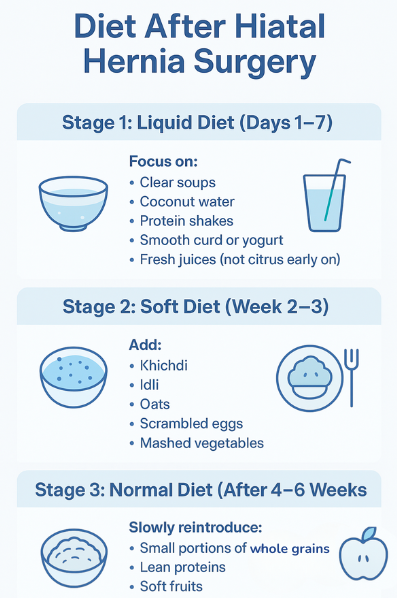
Stage 1: Liquid Diet (Days 1–7)
This phase helps minimize strain on the surgical site.
Recommended:
- Clear soups
- Coconut water
- Protein-rich liquids
- Yogurt and buttermilk
Stage 2: Soft Diet (Week 2–3)
As healing progresses, slightly thicker and softer foods can be introduced.
Examples:
- Idli
- Khichdi
- Oats
- Scrambled eggs
- Mashed vegetables
Stage 3: Normal Diet (After 4–6 Weeks)
Patients can gradually return to a balanced diet.
Include:
- Whole grains
- Lean proteins
- Cooked vegetables
- Soft fruits
Eating smaller, frequent meals and avoiding lying down immediately after eating plays a crucial role in long-term recovery.
For patients dealing with more complex conditions, understanding hiatal hernia treatment options can help guide both pre- and post-surgical care.
When Can You Resume Normal Activities?
Recovery is not just about healing internally; it’s also about safely returning to daily life.
- Walking → within 2–3 days
- Desk work → 2–3 weeks
- Exercise → after 4–6 weeks
- Heavy lifting → avoid for at least 6 weeks
Resuming activity too quickly can increase the risk of complications, so gradual progression is important.
Signs of Complications (When to See a doctor)
While most recoveries are smooth, certain symptoms should not be ignored.
Seek immediate medical attention if you experience:
- Severe or worsening chest pain
- Persistent vomiting
- High fever
- Difficulty swallowing liquids
- Shortness of breath
Expert Insight from Chennai Hernia Care
“Recovery after hiatal hernia surgery is not just about the procedure, it’s about how patients manage their healing at home. With the right diet, gradual activity, and proper follow-up, most patients experience long-term relief without complications.”
– Dr. Deepak Subramanian, Senior Consultant & Clinical Lead, MGM Healthcare, Chennai
Life After Hiatal Hernia Surgery: Long-Term Expectations
Once recovery is complete, most patients notice a significant improvement in quality of life.
Common benefits:
- Relief from acid reflux
- Reduced regurgitation
- Less chest discomfort
- Improved breathing
Long-term success depends on maintaining healthy habits and following medical guidance.
Preventing Hiatal Hernia Recurrence
Although recurrence is uncommon, certain lifestyle habits help reduce the risk:
- Maintain a healthy body weight
- Avoid smoking
- Manage chronic cough or constipation
- Avoid excessive strain or bending after meals
Final Thoughts
Life after hiatal hernia surgery is generally smoother than most patients expect. While the first few weeks require careful attention to diet and activity, recovery becomes easier with time.
Understanding the recovery timeline, recognising normal symptoms, and following expert guidance can make a significant difference in outcomes. If you have concerns during recovery, speaking to an experienced hernia specialist in Chennai ensures you receive the right support at the right time.
Life After Hiatal Hernia Surgery: Long-Term Expectations
Eating Habits
Most patients resume a normal diet but benefit from:
- Smaller meals
- Avoiding overeating
- Limiting late-night eating
- Staying upright after meals
Physical Activity
- Light walking after 2–3 days
- Avoid lifting anything heavy for 4–6 weeks
- Resume exercise gradually
Long-Term Symptom Relief
Most patients experience major improvements in:
- Heartburn
- Regurgitation
- Chest discomfort
- Breathing difficulties related to the hernia pressure
Preventing Hiatal Hernia Recurrence
To reduce future risks:
- Maintain a healthy weight
- Avoid smoking
- Manage chronic cough or constipation
- Practice good posture
- Avoid excessive bending immediately after meals
Final Thoughts
Life after hiatal hernia surgery is usually smoother than most people expect. With proper diet, gentle activity, and good follow-up care, the chances of long-term relief are excellent. If you’ve recently undergone surgery or are preparing for one, remember you’re not alone. Guidance is available at every step.
If you’re preparing for or recovering from hiatal hernia repair, our team at Chennai Hernia Care offers comprehensive evaluation and minimally invasive hernia surgery.
References
- NIDDK – Digestive Diseases Information
- National Institutes of Health (NIH) – GERD & Hernia Studies
- PubMed – Hiatal Hernia Clinical Research
- Mayo Clinic – Hiatal Hernia Overview
- Mayo Clinic – Hiatal Hernia Overview
Frequently Asked Questions
Most patients recover within 4–6 weeks, though full internal healing may take up to 2 months.
A normal diet usually resumed after 4–6 weeks, starting with soft foods first.
Yes, mild difficulty swallowing is common and typically improves within a few weeks.
Recurrence is rare, especially when post-surgery guidelines are followed carefully.
Most patients return within 2–4 weeks, depending on the nature of their work.

Our Medical Review Process:
Our content goes through a structured review process to ensure medical accuracy and reliability.
Written By: Editorial Team, Chennai Hernia Care
Reviewed By: Dr. Deepak Subramanian, MS, FMAS – Laparoscopic & Bariatric Surgeon
Last Updated: May 7, 2026
