


Hernia surgery has evolved significantly over the years. From traditional open surgery to laparoscopic techniques, patients today have access to safer and more precise options. One of the most advanced approaches is robotic hernia surgery, which combines surgical expertise with cutting-edge robotic technology to improve accuracy, comfort, and recovery.
For patients in Chennai exploring modern hernia treatment, understanding how robotic hernia surgery works, and whether it is right for them, can help reduce fear and confusion. This guide is designed to answer common patient questions clearly, practically, and reassuringly.
At Chennai Hernia Care, patients receive focused consultations, personalised treatment planning, and structured aftercare, while surgeries are performed at well-equipped partner hospitals, with the surgeon operating personally.
What Is Robotic Hernia Surgery?
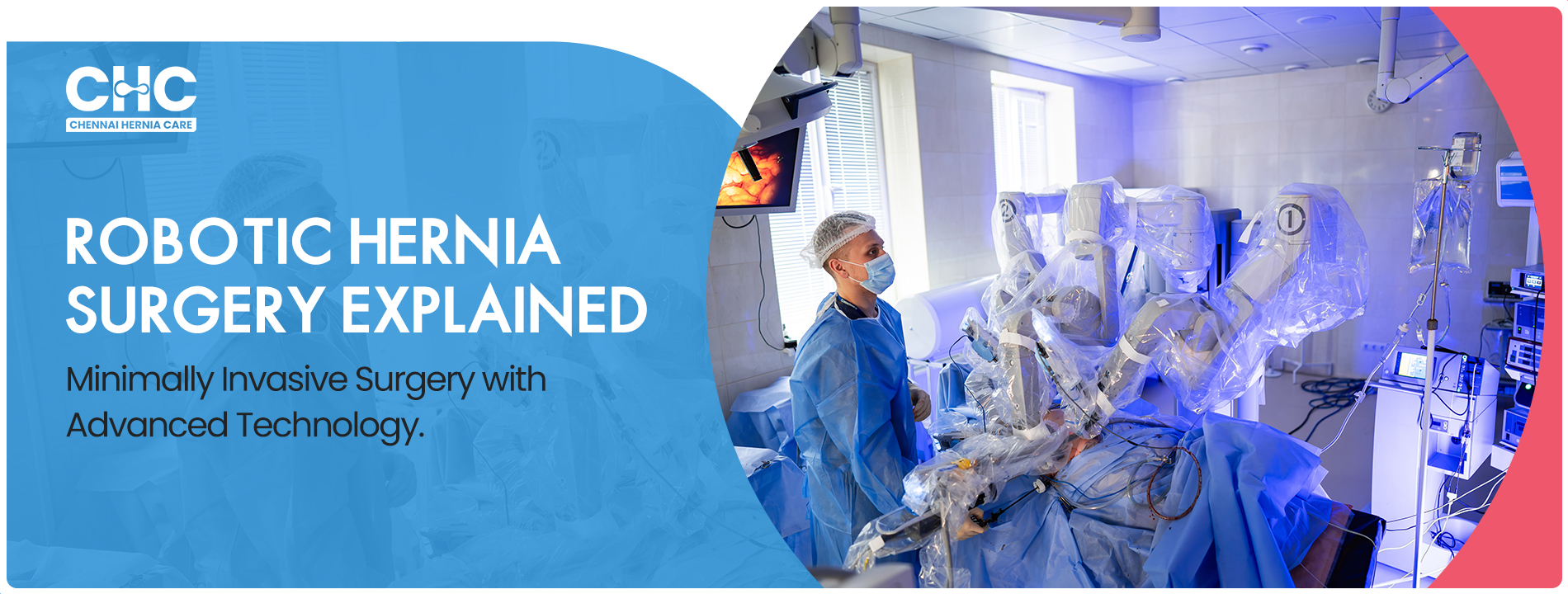
Robotic hernia surgery is a minimally invasive procedure in which a surgeon uses a robotic system to repair the hernia through small incisions.
(The robot does not operate on its own, it fully follows the surgeon’s hand movements.)
Using a high-definition 3D camera and robotic arms, the surgeon can perform delicate movements with greater precision than the human hand alone. This technique is commonly used for inguinal, umbilical, incisional, and recurrent hernias.
According to the Cleveland Clinic, robotic-assisted hernia repair allows improved visualisation and control compared to conventional laparoscopy:
Why Robotic Hernia Surgery Is Gaining Popularity
Robotic hernia surgery is increasingly chosen because it focuses on patient comfort, accuracy, and long-term outcomes.
Key Advantages of Robotic Hernia Surgery
- Smaller incisions (less visible scarring)
- Reduced post-operative pain
- Better mesh placement accuracy
- Lower risk of complications in complex cases
- Faster recovery and earlier return to normal activities
For patients worried about scars or prolonged discomfort, robotic hernia surgery offers reassurance through minimally invasive care.
Is Robotic Hernia Surgery Better Than Laparoscopic Surgery?
This is one of the most common patient questions.
Both robotic and laparoscopic hernia surgeries are minimally invasive. The main difference lies in control and precision.
Robotic vs Laparoscopic Hernia Surgery
- Robotic surgery provides wrist-like instrument movement and 3D vision.
- Laparoscopic surgery uses rigid instruments with 2D visualisation.
Robotic surgery is especially beneficial for:
- Recurrent hernias
- Large or complex hernias
- Patients requiring precise dissection near nerves or blood vessels
For a deeper comparison, you may find our laparoscopic and robotic hernia surgery guide to get helpful information.
Which Type of Hernia Can Be Treated Using Robotic Surgery?
Robotic hernia surgery can be used for several hernia types, including:
- Inguinal hernia
- Umbilical hernia
- Incisional hernia
- Recurrent hernia
- Bilateral hernia (both sides)
Not every patient requires robotic surgery. The decision depends on anatomy, previous surgeries, symptoms, and lifestyle needs.
Who Should Consider Robotic Hernia Surgery?
Robotic hernia surgery may be recommended if you:
- Have a recurrent or complex hernia
- Want minimal scarring and quicker recovery
- Have a physically demanding job
- Prefer advanced surgical precision
However, patients with certain medical conditions may not be ideal candidates. A thorough evaluation by a hernia specialist is essential before making a decision.
Are There Any Disadvantages of Robotic Hernia Surgery?
Being transparent builds trust. While robotic hernia surgery is safe, patients should be aware of possible limitations.
Possible Disadvantages
- Higher cost compared to open surgery
- Not required for very small, uncomplicated hernias
- Availability depends on hospital infrastructure
That said, when performed by an experienced robotic surgeon, complication rates remain low.
According to the National Institutes of Health, robotic surgery outcomes are comparable, and often superior, when used in appropriate cases:
Robotic Hernia Surgery Recovery Time
Recovery is a major concern for patients.
What Most Patients Experience
- Walking on the same day of surgery
- Mild discomfort for a few days
- Return to desk work in 5-7 days
- Full recovery within 2-4 weeks
Every patient heals differently. Factors like age, hernia type, and physical activity play a role.
For a realistic week-by-week recovery overview, read our guide on: Hernia Surgery Recovery Timeline: A Week-by-Week Guide
Side Effects After Robotic Hernia Surgery
Most side effects are temporary and manageable.
Common short-term effects include:
- Mild swelling or bruising
- Temporary stiffness
- Shoulder discomfort (from surgical gas)
Serious complications are rare when surgery is performed by an experienced surgeon who adheres to established protocols.
Robotic Hernia Surgery Cost in Chennai
Cost varies based on:
- Type of hernia
- Hospital facilities
- Use of mesh
- Complexity of the case
In Chennai, robotic hernia surgery is generally higher than open surgery, but is often justified by a quicker recovery and reduced post-operative expenses.
A detailed consultation helps patients understand transparent pricing and available options.
Expert Insight
“Robotic hernia surgery allows us to treat complex hernias with greater precision while minimising patient discomfort. The technology enhances surgical control, but outcomes always depend on the surgeon’s expertise and patient selection.”
–Dr. Deepak Subramanian, Robotic Hernia Surgeon, Chennai.
Dr Deepak specialises in advanced hernia repair techniques, with a strong focus on robotic hernia surgery in Chennai, offering patient-centric care before and after surgery.
Choosing the Right Hernia Care in Chennai
Choosing the right surgeon and care pathway matters as much as the technology itself.
At Chennai Hernia Care, patients benefit from:
- Dedicated hernia clinic consultations
- Individualised treatment planning
- Robotic hernia surgery is performed at trusted hospitals
- Structured post-surgery follow-up and guidance
If you’re considering robotic hernia surgery or want clarity on the best option for your condition, a consultation can help you make an informed decision.
References: Cleveland Clinic | NIH
Frequently Asked Questions
Yes. When performed by trained surgeons in accredited hospitals, robotic hernia surgery is considered safe and effective.
For complex or recurrent hernias, robotic surgery offers better precision and comfort. Simple hernias may not always need it.
Robotic surgery offers enhanced control and 3D vision, which can be helpful in complex cases.
Patients with certain medical risks or very small uncomplicated hernias may not require robotic surgery.
Failure rates are low and comparable to laparoscopic surgery when performed by experienced surgeons.

Our Medical Review Process:
Our content goes through a structured review process to ensure medical accuracy and reliability.
Written By: Editorial Team, Chennai Hernia Care
Reviewed By: Dr. Deepak Subramanian, MS, FMAS – Laparoscopic & Bariatric Surgeon
Last Updated: February 2, 2026

https://t.me/s/PortablE_1WIN
https://t.me/ut_1xbet/362
https://t.me/ed_1xbet/440
https://t.me/ed_1xbet/467
https://t.me/ed_1xbet/205